

Thought Leadership
Q&A with Sean Male on Understanding Ontario’s New Species Conservation Act
May 11, 2026
On March 30, 2026, the Species Conservation Act (SCA) officially came into force in Ontario, replacing the Endangered Species Act, 2007. The new piece of legislation’s goal is to provide protection and conservation for species at risk and their habitat, while taking into account social and economic considerations. We asked GEI’s Sean Male, Vice President, Natural Heritage Practice Lead a few questions to understand what the new act means for industries navigating the new environmental requirements on projects impacting protected species in Ontario.
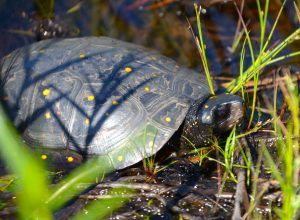
Spotted Turtle
What’s staying the same in the Species Conservation Act?
Though a new law, the SCA provides many of the same protections as the Endangered Species Act:
- The Committee on the Status of Species At Risk in Ontario (COSSARO) will continue to provide recommendations for the status of all species based on independent scientific review.
- Listed species are provided protection from harm, and their habitat is protected.
- The definition of habitat remains the same.
What’s different in the Species Conservation Act?
Several changes are notable. These include:
- The addition of species to the Protected Species in Ontario (PSO) List is no longer automatic. COSSARO recommendations will be received by the Minister and considered for addition to the PSO List.
- The PSO List no longer includes species identified as being of Special Concern, or aquatic species and migratory birds that are protected under the federal Species at Risk Act (SARA).
- The SCA takes a registration-first approach, which means the vast majority of any activities will be registered; permits will only be required in limited circumstances.
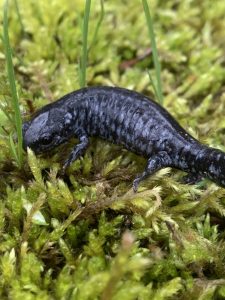
Small-mouthed Salamander
What activities have exceptions from the SCA requirements?
Several activities exempted under the ESA continue as exceptions under the new SCA including, but not limited to:
- Protecting a person or animal from an imminent risk to health or safety
- Protecting property from significant damage caused by animals
- Impacts to Black Ash outside of designated municipalities, immature individuals, or unhealthy individuals
- Impacts to Butternut tree nuts and Butternut trees affected by canker to such an advanced degree that retaining the tree would not support the protection or recovery of the Butternut species in the area where the member is located (previously referred to as Category 1 trees).
If undertaking an excepted activity, it is important to review the requirements for your individual activity.

Mottled Duskywing
What actions are required for impacts that are not excepted?
If you’ve identified that you are undertaking an activity that is not subject to exception, the first step is to determine if the project is an activity requiring a permit.
Based on the current permitted activities regulation, most development works would not meet the threshold of a permitted activity, which is designed for specific situations that would intentionally harm a species at risk, as opposed to a species at risk being harmed incidentally as a result of the project activities.
Most activities will trigger registration requirements, and the registration process requires several considerations before undertaking an activity. This includes the preparation of a conservation plan, registration preparation and submittal, the arrangement of required training, the implementation of mitigation measures and monitoring during and following the activity.
If you determine you are going to have a residual effect on the species or their habitat (e.g., you will remove a portion of the habitat), then conservation measures (e.g., creating or enhancing habitat, supporting scientific research) have to be included. Contact me to learn specifics about these measures and the proper sequence.
What does this mean for existing permits/registrations under the Endangered Species Act?
If the permit/registration is in respect of at least one species on the PSO List, then it is considered a deemed permit/registration subject to the SCA. The definition of habitat that applied at the time of the permit/registration is the definition applicable to the permit/registration.
As a result, you are required to continue to abide by the requirements of your permit/registration, for all species subject to it. Additional legal considerations/consultation with the Ministry are required if you would like to remove the species that are no longer protected from your existing registrations/permits.
If you need to make amendments to your registration you can do so before July 1, 2027, but you cannot add new species to your registration. If you are adding new species, or it is after July 1, 2027, you will need to create a new registration under the SCA.
If you have a permit or registration for a species that is no longer protected under the PSO List, then these are not deemed instruments under the SCA. As the ESA has been repealed, these permits and registrations are now non-enforceable, and therefore compliance is no longer required at the provincial level. However, you must consider what other permits or approvals/commitments have been made for the activity in question. Overall, each specific situation should be reviewed with a qualified professional and/or legal advice should be obtained to ensure protection.
What’s the big picture going forward?
The changes to species at risk protection represent some of the biggest legislative changes in the natural environment field in several decades. However, at its core, species at risk protections remain in place for both individuals and their habitats.
Most importantly, it continues to be the responsibility of the proponent of an activity to ensure they are not impacting protected species or their habitat. That means completing ecological surveys in advance of undertaking activities to confirm whether species at risk are present, and when identified, finding ways to avoid and/or mitigate the impacts, and then addressing any residual effects.
Registrations in this process will be more common for all activities where potential impacts exist to ensure proponents are legally protected while undertaking an activity in proximity to species at risk or their habitats.
Have additional questions about the new legislation and what it means for your projects potentially impacting Species at Risk? Contact Sean.