

Thought Leadership
Invaluable Infrastructure: Why Proactively Managing Large Diameter Feedermains is Critical for Communities
April 24, 2026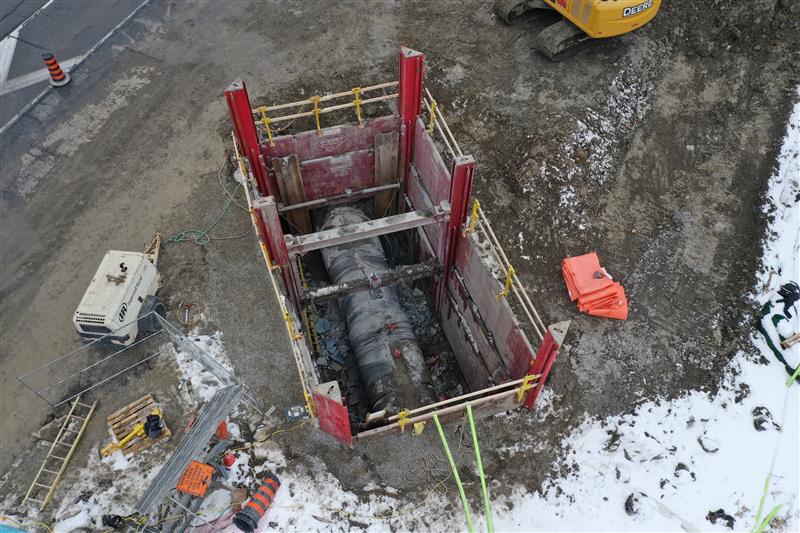
By Project Engineer Yvonne Post
Large diameter feedermains are among the most critical components of a municipality’s water distribution system. These durable pipes move vast quantities of water between water treatment plants and pumping stations, and into local networks, supporting millions of people, businesses, and essential services every day. Municipalities and linear asset owners know that because of their size, location, and role, feedermains are often irreplaceable in the short term.
Failures can result in widespread service disruptions, significant property damage, and long recovery times. As populations continue to grow, water demands increase, and construction costs escalate, the importance of proactively managing these assets cannot be overstated.
Unlike smaller distribution pipes, large diameter feedermains are expensive, complex, and highly disruptive to replace. Proactive management is fundamentally about taking care of what we already have first. But where to begin? Let’s take a closer look at some of the areas where municipalities can start taking proactive measures to address challenges before they become issues.
Understanding Water Quality Monitoring
Arguably one of the worst things that can happen in any distribution system is an adverse water quality incident. Municipalities have a responsibility to ensure that the water reaching consumers is clean and safe to drink and meets the standards set by the Canadian Drinking Water Guidelines. Effective water quality monitoring is a cornerstone of proactive feedermain management. Owners should regularly review and challenge their monitoring strategies to ensure they provide meaningful, actionable information, asking questions such as:
- Are sampling locations representative of conditions throughout the feedermain, or could localized issues be missed?
- Where are the water quality analyzers located in the treatment plant or pumping station relative to the chemical dosing point? Is there adequate mixing?
- What parameters are being monitored? Are these the best parameters to monitor to catch issues?
- What are the alarm setpoints? Do the setpoints provide adequate time to react to an issue?
- Are there clear standard operating procedures to react to and rectify an issue? How much time do operations staff have to respond, and how long will it take to rectify the issue?
- What is the maintenance schedule for equipment? What equipment is included? What equipment may have been overlooked? Has the maintenance schedule accounted for aging equipment and more frequent maintenance requirements? How is that maintenance tracked?
Maintaining awareness of developing water quality issues supports proactive management and minimizes unplanned operational impacts.
Planning for Flushing Operations
Flushing is often used to investigate water quality concerns or respond to an adverse water quality incident. However, flushing large diameter feedermains is more involved as the flushing process introduces unique risks due to the large volumes of water. Uncontrolled or poorly planned flushing can result in significant operational, safety, and environmental impacts.
One common risk is discharging water directly onto roads, which can flood roadways and create hazards for vehicles, pedestrians, and nearby properties. This risk is amplified in colder temperatures where the risk of water freezing and creating ice on the roads is greater. Owners should fully understand the volume of water that needs flushing from the system and carefully plan discharge locations, while considering receiver capacity, traffic impacts, and public safety. There may be opportunities to construct dedicated infrastructure for flushing like a discharge manhole where flushed water can be directed before outletting directly to a storm system. This allows for better management of water volume as well as dechlorination.
Operator access to flushing locations is another critical factor. Flushing points may be located in challenging or confined areas, and inadequate access can increase safety risks and extend operation times. Proactive planning must assess whether existing access points are suitable and whether improvements are needed to allow operators to safely and efficiently conduct flushing activities.
Coordinating Isolations
Sometimes sections of the feedermain may need to be shut down for maintenance activities, to investigate issues, or to make emergency repairs. This is done by closing valves to isolate specific sections. Double isolation or secondary valving involves closing two valves between the work area and live pressurized pipe to ensure the safety of workers and surrounding areas. Coordinating these feedermain isolations requires a thorough understanding of the system, especially if branch connections are present. Owners should review their networks to determine whether secondary valving is available on all sections of the feedermain. Understanding the impacts of an extended shutdown area allows owners to strategize for isolations, including coordinating with stakeholders and minimizing service disruptions.
Providing Varying Flows
When portions of a feedermain are isolated, system demands and flow conditions can change significantly. Proactive planning requires evaluating whether pumping stations and system controls can accommodate these varying flow requirements.
Reduced demands in isolated sections may require pumping stations to operate at lower flows than typical. Owners should confirm that pumps, valves, and control systems can operate efficiently and reliably under these conditions without introducing operational issues. At the same time, remaining portions of the system must continue to receive adequate supply and pressure.
Understanding and planning for these flow dynamics in advance allows operators to make adjustments confidently during maintenance or emergency events. This flexibility reduces operational stress, improves reliability, and supports safer system management.
Extending Asset Lifespan
Condition assessments and monitoring are key to extending the lifespan of feedermains and critical linear infrastructure. Owners should maintain a clear understanding of the age and condition of critical assets and how these factors influence risk. Inspection programs should be updated accordingly to account for these changes as critical assets age and deteriorate.
Inspection planning should also be forward-looking. Inspection methods may rely on specific system configurations, flow conditions, and access points that may change over time. In addition, system demands may change throughout the year, and continued population growth and water demands may make shutdowns difficult. Owners should consider whether inspection methods used today will remain feasible in the future and what accommodations may be needed to maintain inspection capability.
By integrating inspection results into long-term planning, owners can make informed decisions about rehabilitation, replacement, or operational changes to feedermains. Proactively managing asset condition slows deterioration, reduces the likelihood of catastrophic failure, and defers costly capital projects.
The Value of Being Proactive
Proactive management of large diameter feedermains is essential to meeting the challenges of growth, increasing demand, and rising infrastructure costs. By strengthening water quality monitoring, planning flushing activities carefully, coordinating isolations, managing varying flows, and extending asset lifespan through informed inspection programs, owners can protect critical assets and ensure reliable service for years to come. Taking care of what we have first is not just practical; it is fundamental to sustainable, resilient water systems.
Learn More
To continue the conversation, come see me at the BCWWA Conference on April 30 in Penticton or the OWWA Conference on May 6 in Niagara Falls where I’ll be sharing how we applied these principles to a recent project with the Region of Peel.